The American Labor Movement

DATA STORYTELLING
After meticulous organization of various visualizations and historical analysis,
this page delves deeper into our research questions via various data visualizations.

Introduction
With the onslaught of the Industrial Revolution in the late 18th century, workers and artisans worked to defend themselves against diluted, cheap labor, where there were low wages, unreasonable hours, and unsafe working conditions. [1] Feelings of inequality and anger continued to grow over the century, and with the end of the Civil War in 1865, a general shift in attitudes of the working class culminated in what we now know as the American Labor Movement. It originated as a movement of skilled workers fighting for better rights but economic changes of the time countered against them, aiming to create two distinct classes--the rich and the poor. [2]
Using the dataset from Who’s Who, this project focuses on the marginalization of minorities during the American Labor Movement (ALM). We analyzed specific inequities in unionization, such as economic disparities, racial and immigration discrimination, and unequal leadership opportunities.
Our data compartmentalizes leaders of the American Labor Movement and provides information about various aspects of their lives, such as the father’s occupation. This information helps identify the demographics and backgrounds of those involved in unionization during the American Labor Movement, giving us an idea of who was successful in their efforts. Our research and visualizations explore the various characteristics of these different leaders..

Research questions
1
Where were leaders of the American Labor Movement from and how did that shape involvement in unions?
2
How did socioeconomic status affect the experience of laborers from 1880 to 1920?


Where were leaders of the American Labor Movement from and how did that shape involvement in unions?
The American Labor Movement originated and took place in the United States, but participants of the ALM were not necessarily native-born themselves. The American Dream is a prevalent belief that motivated countless migrants relocating to the United States. The idea that one can rise in status through hard work provided strong morale for the hardships they faced in resettling, all in the hopes of creating better lives for their families’ futures. Consequently, the supply of laborers, driven by booming immigration, was much larger than the demand for labor itself.[1] Through exploration of leaders’ birth countries in the Who’s Who dataset, we sought to find patterns between place of birth and leadership positions. We wondered, statistically, were immigrants were more likely to become union leaders due to belief in the American dream and lower status coming to the United States?
IMMIGRATION
After the Civil War ended in 1865, various races and backgrounds came together with the desire to reform the workplace and labor regulations, helping set the scene for the basis of the labor movement in the eastern United States. During the era of Reconstruction, the African American slaves who were emancipated and their descendants united amongst the ranks of agricultural, industrial, and manufacturing laborers[2]. They could not have had an idea of the immigration tidal wave’s full extent.
Soon, thousands upon thousands of immigrants from all over the world flooded into the Midwestern and East Coast of the United States. Countless came to America for opportunities to work with the starry-eyed mindset of the American Dream. The numbers of this population were unmatched, continuing with exponential growth, with the majority arriving in the early 1900s. Over the end of the 19th century until around 1920, more than 25 million new immigrants, predominantly people from Asia and Europe, relocated in response to a call for workers{2]. Due to the recent industrialization, a deficit of manual labor created openings for anyone and everyone to fill various positions in the numerous expanding factories, mines, and mills. By the end of 1920, immigrants and their children comprised over half of manufacturing workers, and, if we include the third generation (the grandchildren of immigrants), more than two-thirds of workers in the manufacturing sector were of recent immigrant stock[3].
This first chart depicts the number of immigrants admitted into the US per month, over the course of seven years (1913-1919)[4].
.png)

The second chart depicts the numbers of immigrant aliens yearly admitted into the US, organized by country of origin, over the course of five years (1915-1919)[4].
Using the Who’s Who dataset, we explored this and created two maps that visually represent both where leaders were from and where they migrated to work, with the data in agreement with outside historical sources on the American Labor Movement. Clearly, many of the union leaders were born outside of the United States, visually depicting a diverse group of people in power.

This map is a measure of where the leaders are born— linking the American Labor Movement to international issues and migration. Each dot is sized to correspond to the number of leaders from each country when it is given in the data.

Work Addresses of ALM Leaders are plotted onto a map to represent the different locations of the movement. The most prominent areas include large cities, the midwest, and east coast.
Although they were a substantial contribution to the workforce, immigration ironically became one of the biggest causes regarding problems within the labor movement itself[5]. Since immigration affects the geographical distribution, scale, and skill composition of the labor force, it also affects labor market conditions on national, regional, and local levels. This meant that non-union American workers faced intensified competition for jobs and underwent wage suppression pressures[5]. For this reason, immigration have an adverse impact on organized labor and the development of trade unionism -- from the eyes of American natives that is. As a result, immigrants were unfortunately met with multiple restrictions and regulations in union organizations, which undermined the whole purpose of unions’ pushes for inclusion and alliance in the first place. Thus, immigration has been seen as an issue plagued by conflict and social complexities in context of trade unionism at this time.
WHY UNIONS?
The labor movement in the United States stemmed from the desire to protect the interests and needs of laborers and the working class. Unions were formed for the purpose of social reform, raising awareness and fighting for workers' rights. The incoming of organized labor unions gave workers the opportunity to fight for better wages, reasonable hours, and safer working conditions. However, the labor movement continued to branch out and eventually included efforts to stop child labor, establish health benefits, provide aid to injured or retired workers, raise women’s rights awareness and gender equality, and much, much more.
From this graph, the American Federation of Labor and Affiliated bodies is the most common organization leaders are a part of. There are also miscellaneous groups that could have a more focused concentration such as education or labor fields like coal miners.
Origins of the labor movement stem all the way to the late 18th century, the height of the industrial revolution, when the call for workers and manual labor grew. However, it wasn’t until years after that the labor movement started to take wind. Post-industrial era left multitudes of workers in the arms of capitalist minded business owners and officials, forced to work strenuously long hours in hazardous conditions without any benefits or voice in their policies. It wasn’t until workers started realizing that they could fight back, organizing strikes and pushing for reform.
As feelings of inequality and tension grew, an increasing number of uprisings occurred. From the late 1870s until the late 1910s, workers from all lines of work and various sectors joined in on strikes, walkouts, and boycotts[6].
On August 20, 1866, the National Labor Union was founded, marking the first official national labor federation in America, a critical part of the labor movement’s growth. The union was comprised of skilled and unskilled workers, farmers, and reformers mainly dedicated to fighting for the 8-hour workday. Then on December 28, 1869, the famous Knights of Labor group was founded in Philadelphia, in the wake of railroad strike victories. The Knights fought for reforms on hours, wages, women's economic rights, racial equality, child labor, industrial unionism[7], etc.
The following decades soon saw the growing formation of local, regional, and national unions in every domain of the workforce, even women. A staggering majority of union workers stemmed from the following groups: Railroad workers, coal miners, textile and manufacturing workers, steel workers, garment workers, farmers, etc.
This timeline compiles all the important dates and events leading up to and during the American Labor Movement. It entails the numerous strikes of workers in the multiple industries, such as the railroad and the mining industries. It also includes critical dates of union formation, as well as the changes in labor legislation over the period from 1869-1920[8] [9]
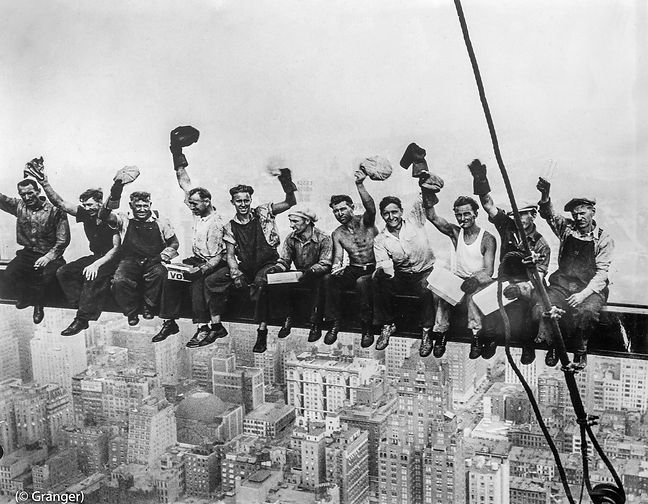

02: socioeconomic STATUS AND laborers
A lot of insightful information about the union leaders could be collected and analyzed but the Who’s Who dataset only provides a few other pieces of information beyond their birth country, place of work, and unions of involvement. The two most perceptive additional pieces of information were father’s occupation and career. The career data was far too convoluted to make sense of, so our team skimmed the information but did not focus on it. Instead, we explored what insight we could gain from knowing the occupations of their fathers’ included in the dataset. We determined that father’s occupation was a good source for gaging what type of family leaders came from and their socioeconomic status.
Surprisingly, an overwhelming amount of leaders’ fathers’ occupations were unknown. The second highest occupation was farmer, which was also surprising as the majority of employers in the industrial sector, a major part of the market, overlooked less skilled workers. They tended to hire artisans.
In this graph, it demonstrates that it is most common for the leaders’ fathers to be unemployed or the data does not have their job listed. Other common jobs are farmer, carpenter and merchant.
EFFECT OF SOCIOECONOMIC STATUS
There is a general agreement that a large portion of both native-born and immigrant union leaders came from families of professional, business, and managerial occupations[10]. Simply put, those in the higher echelons of society, whether immigrant or American citizen, had the upper hand in gaining leadership roles and traction. This posed an unfair representation of the population, as the majority of the movement itself concerned those in positions of manual labor, such as farming and mechanics.
Those in manual labor may have been paid less or worked in poorer conditions, making it even more difficult for them to provide for their families and limiting their time to not only lead unions but also participate in any. Immigrants may have also had a more difficult time attaining leadership positions as they often immigrated wanting to improve their rank, creating the assumption that most immigrants were probably of lower rank.
This bar graph pertains to father occupations of American Labor Movement leaders that were born into the U.S. The most common occupation is farmer, carpenter, and lawyer, while being unemployed or not having the data listed is the second most category.


This bar graph illustrates the father’s occupations for immigrants involved in the movement. The most common mirrors the U.S. with the most common being farmers, or “none” which can mean the father is unemployed, that they were not raised with a father/father has passed, or that the data is missing.
The prevalence of native-born leaders with fathers who were carpenters and lawyers starkly contrasts with the prevalence with immigrant leaders with fathers whose occupations were in the “none” category. This leaves questions for why the data was missing for more immigrants than native-born workers--were immigrants’ information more likely to be silenced? If so, why?

CONclusion
CLOSING REMARKS
With the Industrial Revolution and heightened demand for immigration into the United States in the late 19th century and early 20th, the labor supply increased dramatically and far surpassed the labor demand. Increased competition resulted in an abundance of semi-skilled or unskilled workers in jobs with poor conditions. As those at the bottom of the totem pole, they were paid low wages, worked long hours, and were exposed to dangerous equipment. Wanting a better lives for themselves and their families, this diverse group of workers--immigrants and natives, coming from families of varying professions, and of different socioeconomic statuses--came together and unionized for what would be a centuries-long battle for better workers’ rights.


Though we have heavily discussed the past thus far, thematic Issues from our research have critical implications and connections to society today. A multitude of labor issues still stand, and still pose harm to workers nationwide. In today’s world, it is not one industry that prompts the biggest impact on the workford, but our own government. the Trump Administration’s policies towards thousands of undocumented immigrants, who have since lived and worked in the United States, have resulted in the forceful deportation of foreign-born individuals from the country they have known, as well as the separation of families and questionable violations of human rights. Racial and ethnic tensions run high, and the federal government’s platform is being used to instil social disparities and propaganda. Hazardous manual labor and illegal sweatshops still exist across the country to support the monster that is American consumerism, with workers underpaid, overworked, and unprotected.
Since the American Labor movement, we have made some progress, like in the establishment of minimum wages, the 8-hour work day, and legislative measures which came about response to the issues voiced by AML protesters. Nevertheless, progress must reflect the changing times. Our present needs change; voices need to be heard. Utilizing digital tools to uncover new insights of the past in consideration of our current political atmosphere, we can help stand in the movement towards equality and justice for the diverse population of hardworking people that make up America’s workforce, in this way, helping ensure the American Dreams of the future.
-
The Editors of Encyclopaedia Britannica, “Industrial Revolution,” Encyclopædia Britannica (Encyclopædia Britannica, inc., September 4, 2019), https://www.britannica.com/event/Industrial-Revolution)
-
Charles Hirschman and Elizabeth Mogford, “Immigration and the American Industrial Revolution from 1880 to 1920,” Social Science Research (Academic Press, April 8, 2009), https://www.sciencedirect.com/science/article/abs/pii/S0049089X09000398?via=ihub)
-
“Labor Unions,” Immigration to the United States, accessed December 9, 2019, https://immigrationtounitedstates.org/676-labor-unions.html)
-
"IMMIGRATION." Monthly Labor Review 9, no. 2 (1919): 276-79.
-
Vernon M. Briggs Jr., “American Unionism and U.S. Immigration Policy,” CIS.org, accessed December 8, 2019, https://cis.org/Report/American-Unionism-and-US-Immigration-Policy)
-
"CONCILIATION WORK OF THE DEPARTMENT OF LABOR, APRIL 16 TO MAY 15, 1917." Monthly Review of the U.S. Bureau of Labor Statistics 4, no. 6 (1917): 1018-021. www.jstor.org/stable/41823471
-
History.com Editors, “Labor Movement,” History.com (A&E Television Networks, October 29, 2009), https://www.history.com/topics/19th-century/labor)
-
“Our Labor History Timeline: AFL-CIO,” AFL, accessed December 8, 2019, https://aflcio.org/about-us/history.)
-
“Timeline of U.S. Labor History,” libcom.org, accessed December 8, 2019, https://libcom.org/history/timeline-us-labor-history)
10. Janice Fine, “Community Unions and the Revival of the American Labor Movement,” Politics & Society 33, no. 1 (2005):
pp. 153-199, https://doi.org/10.1177/0032329204272553)